 The Teacher's Corner
Puzzles and Activities


 This indicates resources located on The Teacher's Corner.
Light and Color
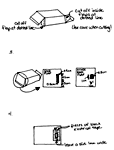 Build a stereoscope to learn about light and color.
Submitted by: Jennifer
Atom Lesson
Students will review what the parts of an atom, learn how to determine how many neutrons, protons and electrons an element have based on the atom number, and determine the number of electrons residing on each orbiting shell.
Submitted by: Henley Chu - Arcadia, California
Chemistry Rocket Fun Grades Any
Summary: 3... 2... 1... BLASTOFF! Construct cheap, easy and fun rockets!
One thing that is really fun is for the students to make rockets. All you need is empty film canisters. You can get them for free from any place that develops film.
1. Draw a rocket onto paper that can be wrapped around the canister. Make sure you make copies of it for the students to trace and color.
2. Have the students decorate it and wrap it around the canister with tape. The canister opening will need to face downward.
3. Have the students put an Alka-seltzer tablet inside along with water.
4. Replace the lid quickly and place on the floor. Make sure they have newspaper down. You will be surprised how high it will go.
5. From that point students are required to get into groups and discuss what happened. You'll have a blast!
Submitted by: Lori ashes23@email-removed
Chemistry Thematic Unit
Our complete chemistry thematic unit.
Important Household Compounds Grades Upper Elementary & Middle
Keep students interested in chemistry! "When I teach compounds in chemistry, I make stations in my lab where students work with different household products. They make a list of all the compounds in common products such as toothpaste, soap, ketchup, mayonnaise, soup, spaghetti and aspirin. Then, they make a presentation on the compounds they know and the elements they can identify. Most students are surprised when they find out that sulfur soap exists, toothpaste has sodium hydroxide and the compound in vanilla gives it its characteristic odor. The students learn to appreciate the role and importance that chemistry plays in every day life."
Submitted by: Elena Maldonado-Vargas elena22@email-removed, a chemistry teacher at The University of Puerto Rico High School in San Juan, Puerto Rico. This idea was posted in the NEA's Weekly Works4Me Newsletter.
"The Incredibles" Worksheet
Here is the worksheet on "The Incredibles." It came at a time where we just finished learning about states of matter. The day the homework was turned in we had an animated discussion about our answers. MSWord Version & PDF Version
Submitted by: Teddi Banks, 3rd & 4th Grade Science, Rodeph Sholom School tbanks@email-removed
Magnets & Electricity Unit
Our complete Magnets and Electricity thematic unit.
Matter Sort Grades K-2nd, requires Kidspiration software
This Kidspiration computer activity allows students to sort various items into one of three different groups: solid, liquid or gas.
Submitted by: Jennifer
Simple Machines Unit
Our complete simple machines thematic unit.
 Back to the Science Lesson Plan Index
Airplanes Grades Various
Here are a variety of resources for bringing airplanes into your classroom.
A Paper Airplane - Here are the plans for the "Sabertooth" paper airplane. It's easy and fun!
Alex's Free Paper Airplanes - "These paper airplanes are classy designs and will fly and win competitions so make them and fly them." And all of the designs are FREE!
10 Innovative Ways to Bring STEM to Schools
Curious George STEM
The Educator’s Guide to Real Estate Lesson Plans: Math & Science
Computer Programming Basics Lesson Plan: Tynker Games
The Educator’s Guide to Applying Real-World Math: 15 Resources with over 100 Lesson Plans
Making Science Labs Accessible to Students with Disabilities
Squishy Circuits
"Squishy circuits are a fun way to learn and explore the basics of electricity and electrical circuits."